Oct 15, 2026
Joining Lablup as a Marketer
 Soyeong LimTechnical Content Marketer
Oct 15, 2026
Culture
Joining Lablup as a Marketer
- Soyeong LimTechnical Content Marketer
I'm Soyeong Lim, and as of September 23, I've spent exactly six months at Lablup as a technical content marketer. Before this, I built my career as an AE (Account Executive) at advertising and marketing agencies. Lablup's technology and its vision and mission, "Make AI Accessible," resonated with me so strongly that I knocked on the door more than once before I finally joined.
In this post, I look back on six months at a tech company where R&D makes up a large part of the work, and on what a marketer's role at a company like Lablup might be.
A first week unlike my worries
At the agencies, I mostly worked with other marketers rather than developers or researchers, so before joining Lablup I worried a lot about how I would communicate with developers. I also couldn't quite picture what I could do as a marketer at a technology-driven company, or where I could contribute.
Two things surprised me most in my first week: "This many developers and researchers in one company?" and "Non-developers use AI this well?" Even my onboarding followed a well-organized process that our HR lead had built with AI, and when I looked around, everyone was working with AI, whatever their role.
My first conversations with developers also went differently than I had feared. I hesitated a lot because I didn't know where to start with my questions, and the answer I got was "Just tell us where you stop following." Once I said what I didn't know, we could work through it together from there.
Technology as the starting point
To be honest, when I joined I didn't really understand Fractional GPU, Kubernetes, or KV cache. I was a marketer through and through. Right after joining, I conducted an interview with the research team and could barely follow anything that was said. I was completely lost.
So I started reading our technical introduction materials carefully from the beginning. I asked Jinho on the content team about the parts I didn't understand, and I asked AI too, but what helped most were the talk videos from the Lablup Conference. Once I had learned the terms and started writing copy, what I kept getting wrong was less the terms themselves than the scope each term covered. On the backwall for the first exhibition booth I made, I wrote "12+ AI accelerator manufacturers" and later corrected it to "12+ AI accelerator types." When I checked properly, the number 12 counted the supported accelerator models. That's when I realized that misreading what a single number means can change the point and the claim, and can leave readers with a serious misunderstanding.
I started to feel I was getting it once I was making booth backwalls regularly and posting technical content on social media. By then I could work out on my own how our technology differs from other companies' and what we should lead with. Even when naming a product or a single feature, I began checking whether that word already refers to something another technology does. These days, before I explain a feature, I first ask why people need this technology and why this piece of writing needs to exist.
Responsibility for every sentence
The sentence I spent the longest on was for the KCC(Korea Computer Congress) booth backwall, the first one I made. I knew exactly what I wanted to say, but sharpening it into one line was hard. The question "You have the hardware, but can you see who's using what?" went through many rewrites before we settled on "Can't see your usage, and is idle hardware going to waste?" I also caught, right before printing, that the CUDA and TensorFlow versions we had used as an example were a combination that can't actually run together.
In a social media post introducing KV cache offloading, I first wrote that we move "the session" and corrected it to "the session's KV cache." I also changed the benefit from "longer context" to "higher concurrent throughput." AI writes drafts quickly, so catching sentences that sound plausible but are wrong ended up being my job.
Through this trial and error, I learned that copy at a tech company has to be accurate before it can be clever, and that the simpler and more effective a sentence is, the better. What helped me most along the way was review and feedback from people at Lablup. My colleagues pointed out what I couldn't see on my own, so even now, before any technical sentence goes out, I ask one or two people to check that I haven't missed the forest for the trees.
Events from start to finish
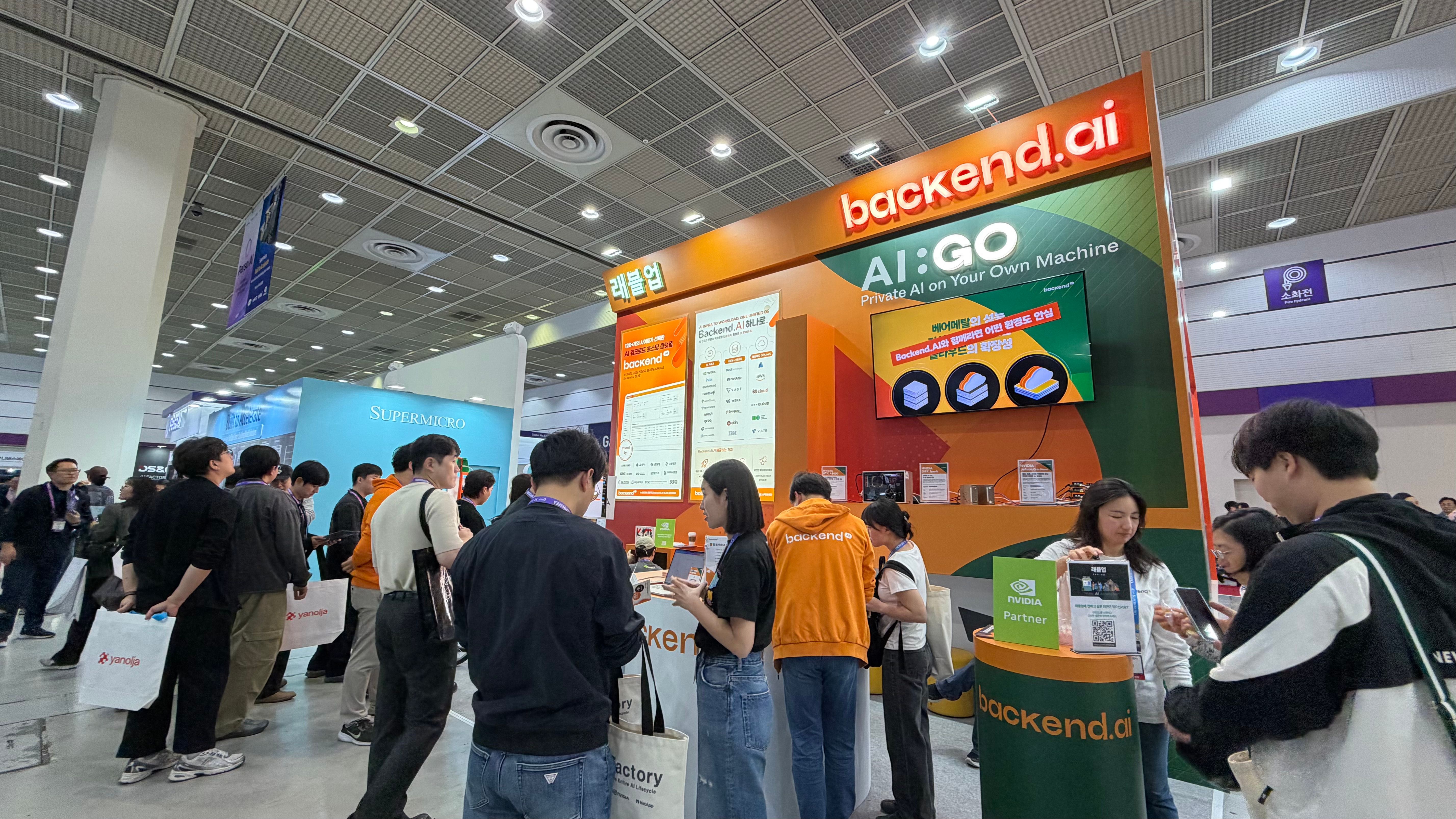
As an AE, I mostly handled brand events, and meeting the client's needs came before taking ownership myself. Lablup goes to AI events in Korea and abroad often to meet customers and prospects, so early on it was never easy to work out for each event what it was meant to achieve, why we were there, and which message to emphasize.
AI EXPO KOREA 2026, the first event I joined in Korea, is still the one I remember best. I felt we needed to show how our products are actually used and how they could be used, and after talking it through with the team, we put AI:GO front and center for the first time. It was the first event I handled myself from start to finish: before it, we ran an invitation giveaway on social media, and during it I posted booth updates there for the first time since joining.
Of the overseas events, the one I remember most is GITEX AI EUROPE 2026, which I didn't attend in person. I worked with the team members staffing the booth ahead of time to get a sense of the local atmosphere and decide what to emphasize, but after the event I heard that the visitors were not the audience we had expected. It looked quite different from what I had pictured. It showed me that even with assumptions in place, both the atmosphere on site and the audience can turn out differently. So I wrote the follow-up email after looking at who actually visited and which Backend.AI features they would likely care about. Running several events taught me firsthand that an event only wraps up cleanly when the recap content and follow-up emails carry through as one flow.
Lessons from the numbers
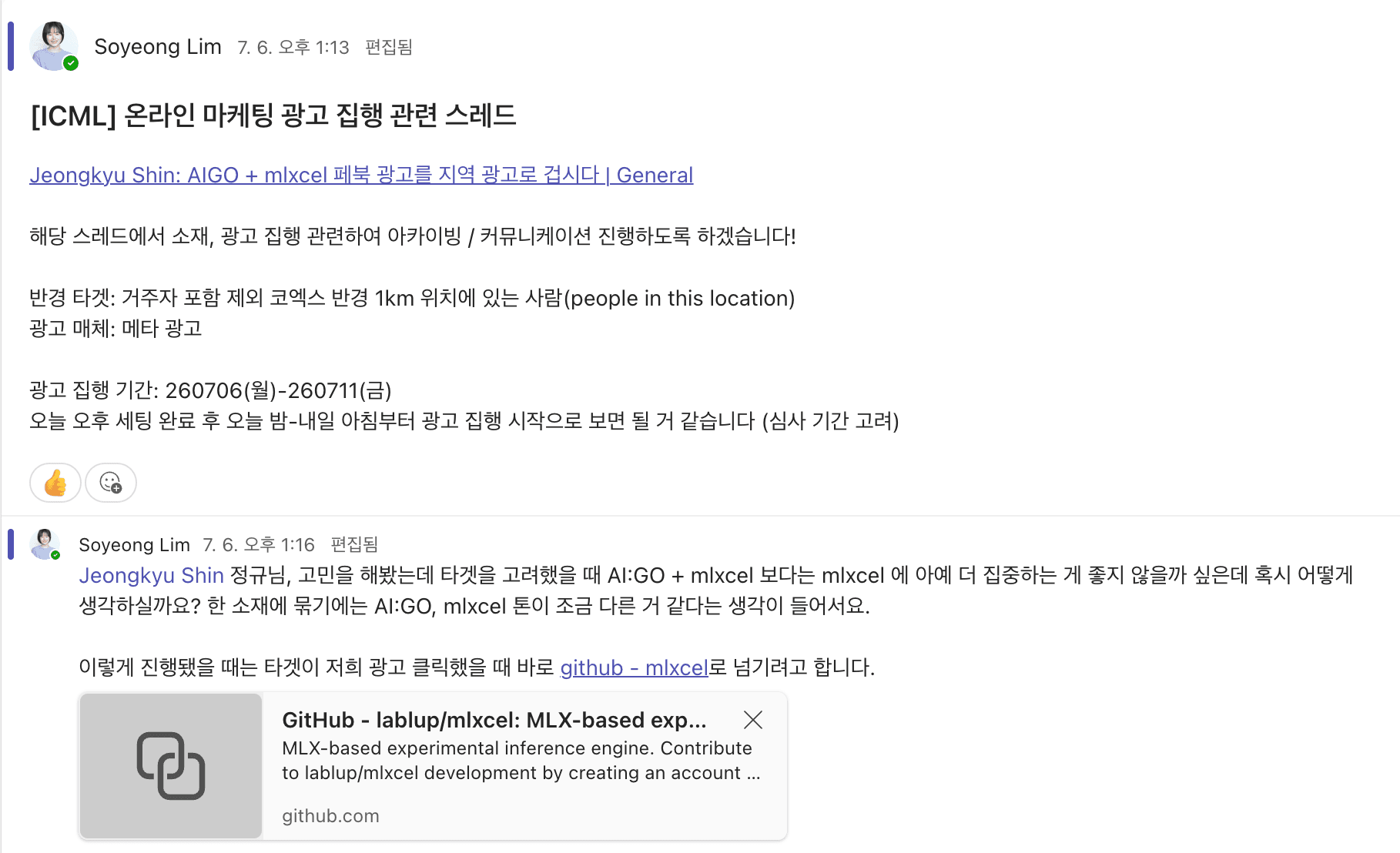
I believe data-driven decision-making is at the heart of marketing. Even when persuading colleagues, numbers are what get the conversation going, so when I joined Lablup I wanted to do marketing that builds up data and uses it to plan what to do next.
The first paid ad I ran after joining Lablup was for MLxcel during ICML 2026 in July. Since many machine learning researchers gather at COEX during the conference, we decided to promote MLxcel, our open-source inference engine for Apple Silicon, with a local ad limited to a 1 km radius around COEX. In the last three days, though, the cost of showing the ad to the same number of people rose to nearly double that of the first half, which meant a short campaign in a small area had quickly run out of new people to reach. From the next campaign on, I set the run to two weeks, with a rule to end early if the number of new viewers stops growing by day 7.
For the newsletter, I made a results report every month and used it to set the direction for the next issue. The May issue carried the MLxcel launch news in both the Korean and English editions. The number of readers who clicked went up in the Korean edition but dropped sharply in the English one. We concluded that overseas readers respond more to engineering posts than to company news, so starting in July we put a technical article at the top of the English edition, and in August the click rate on engineering content in the email doubled.
The data never moved exactly the way I assumed it would. But each time, it became clearer what I needed to change next, and I learned that for a marketer at a tech company, data is what the next decision rests on.
Systems that run on their own
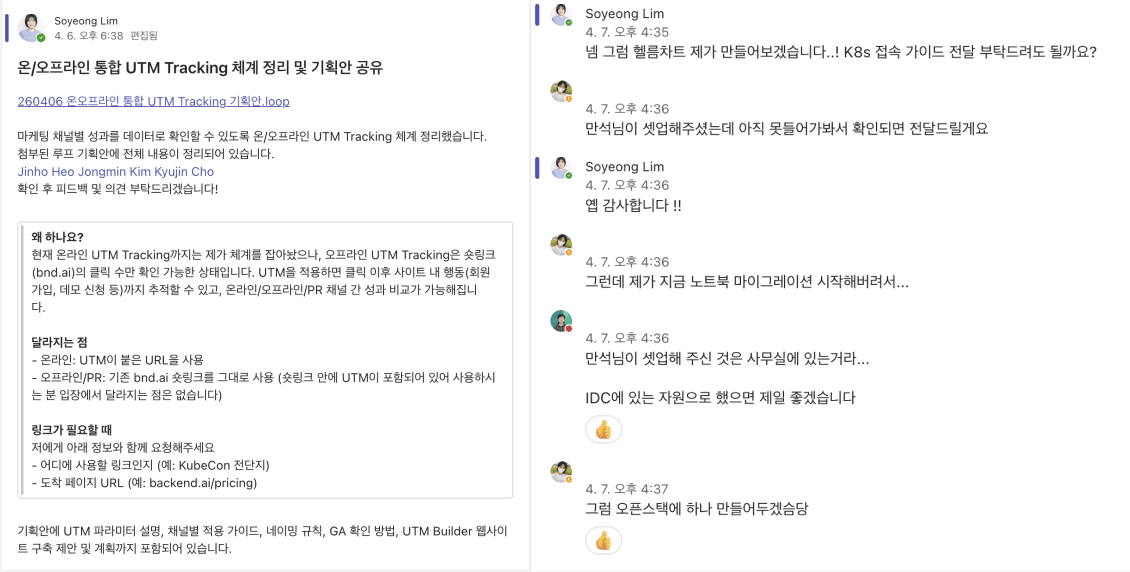
As recurring tasks piled up, like creating UTM links, organizing event attendee lists, and sending newsletters, I realized that if I relied on memory alone, I would eventually miss something. So I decided to turn recurring work into tools and rules so that no one has to remember every step, and one of those is the UTM Builder. We were already adding UTM parameters (values attached to a link that show where a visit came from) on online channels, but the short links we used at offline events only told us how many times they were clicked. Adding UTM parameters to short links let us compare online, offline, and PR channels by the same standard, and I built it as a web tool so that anyone creating a link follows the same rules. I started out not knowing what a Helm chart was, but I deployed it to our internal server myself, asking AI one step at a time.
Event attendee lists were the same story. Every event's list came in a different format, so I set up a standard for splitting them by region and mapping them to the same columns. Now I can clean up the leads in one pass, whatever format the list arrives in.
I work with AI like a colleague, but I set rules before handing it any work. In fact, my biggest frustration was Korean copy from AI that read like a translation from English, so I set up a checklist against literal translation that loads automatically whenever I write Korean copy. I also split writing and fact-checking into separate steps, so no sentence goes out without review. The more I took on, the more I learned how important it is to set standards first, so the result stays the same even when I'm not there.
A tech company marketer's role
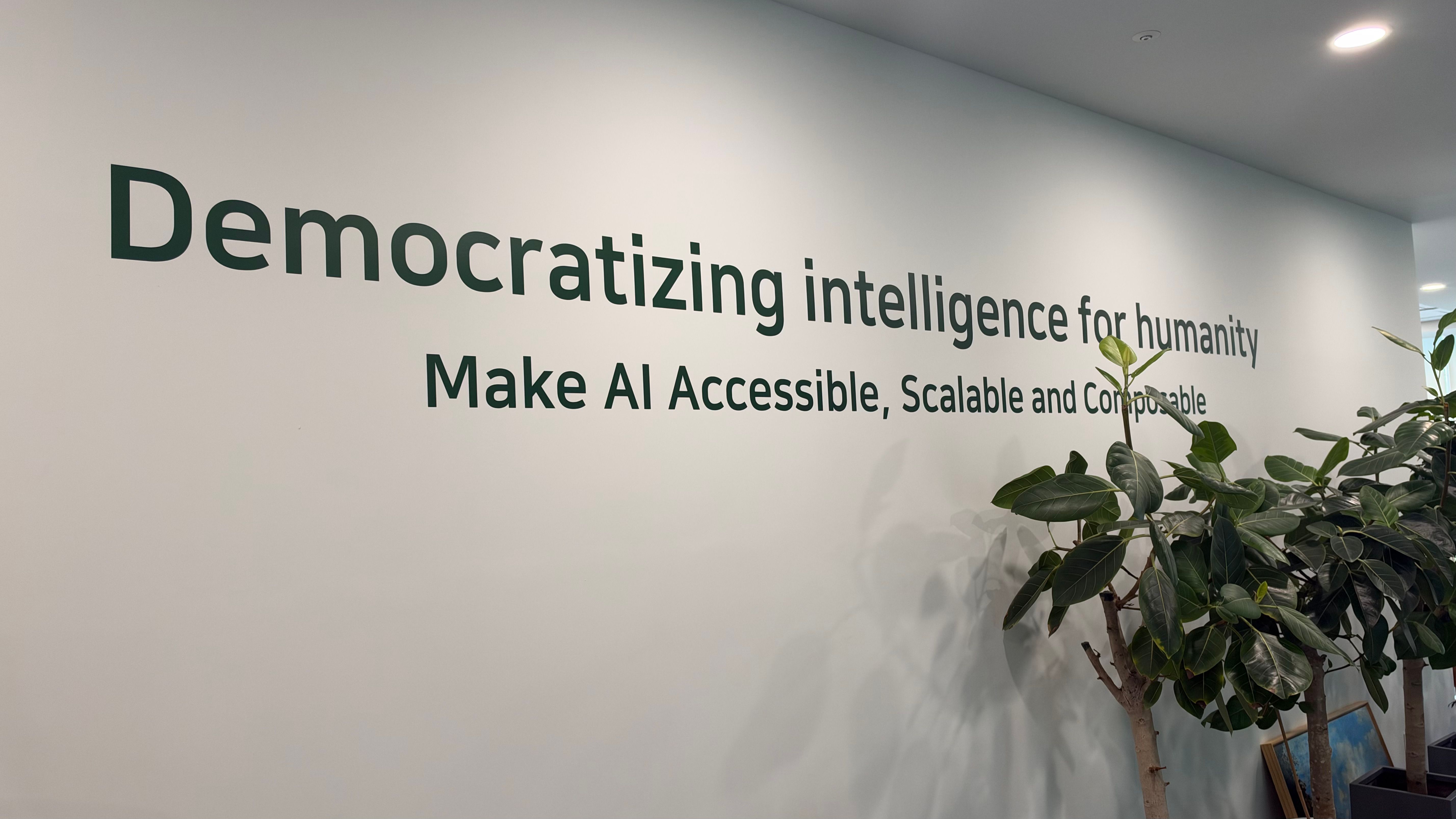
Looking back on these six months, I've come to think that a marketer at a tech company narrows the gap between the language of engineers and the language of the market. I put the technology Lablup builds into words customers can understand, but the technical story I tell must never stray from the facts. I'm also the last person to check those sentences before they go out, because the moment a line in a social post or a paragraph in a newsletter is published, it becomes the company's voice.
Without Jinho on our content team and the colleagues around me, from onboarding until now, someone who knew next to nothing about technology could never have grown this quickly as a marketer at a tech company. All of this was possible because of the people who gave me room to try whatever I wanted, and who ran beside me as running mates and pacemakers so I wouldn't fall too hard. I want to take this chance to say thank you!🖤
You may also like
Ready to lab | up with Lablup?
Apply now