Jul 30, 2025
A frontend world where questions matter more than definitive answers
Jongeun Lee, Sujin Kim
 LablupLablup
Jul 30, 2025
Career
A frontend world where questions matter more than definitive answers
Jongeun Lee, Sujin Kim
- LablupLablup
Lablup is a company we ourselves feel is quite unique. Here, everyone works in the way that suits them best, anyone can freely ask questions and share opinions, and if something needs to be done, anyone can start it immediately regardless of seniority, title, or role. Behind the scenes at Lablup, you will find about 40 people united by the goal of making the complex environments of AI and machine learning easier to handle, even just a little.
We met with Jongeun Lee, the lead of the FrontendDev team, and Sujin Kim, a frontend engineer, who are transforming the challenging command-line interfaces for AI development and services into logical, easy-to-use, and beautiful screens, to hear about their world.
Q. Please introduce yourselves.
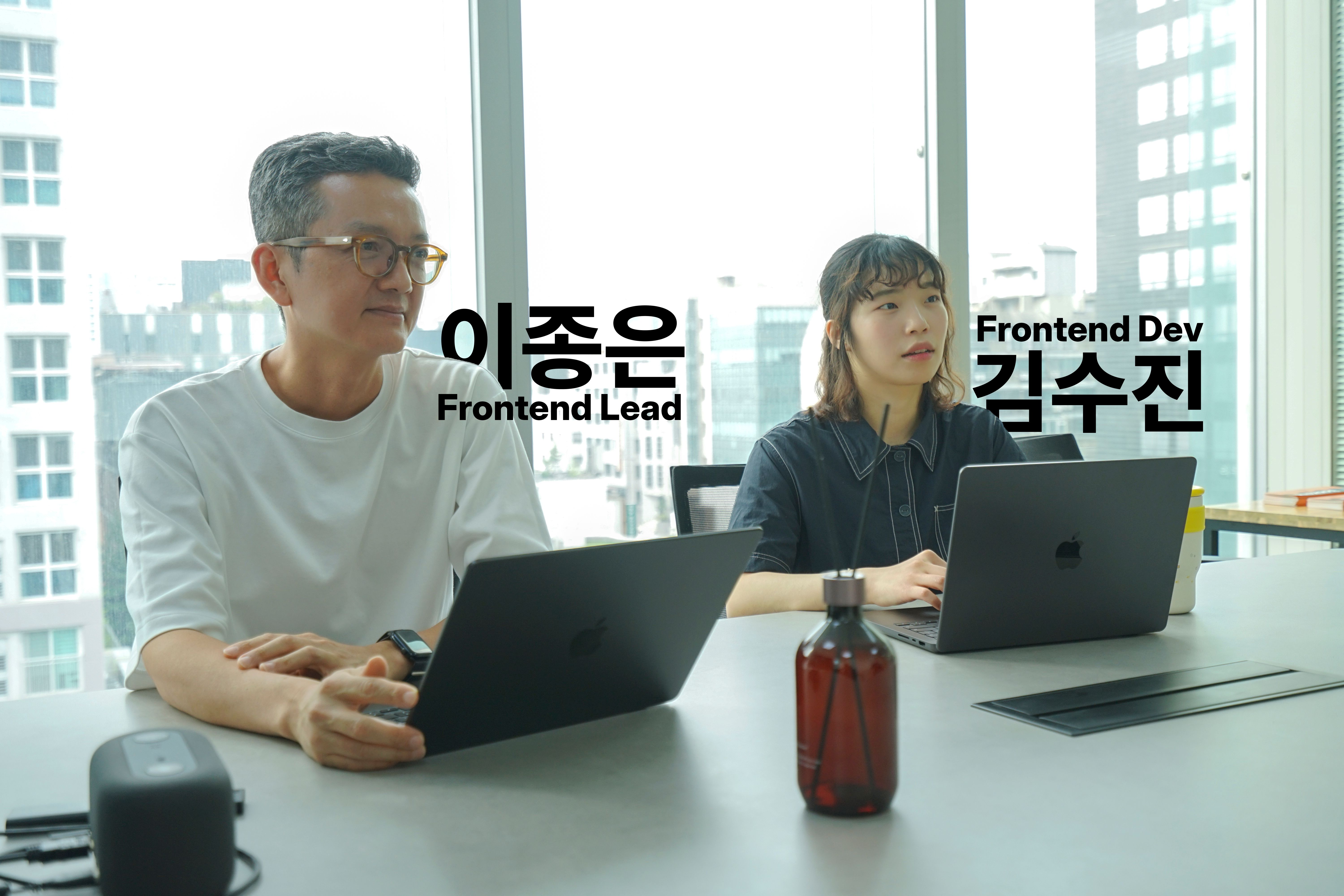
Jongeun: Hello, I’m Jongeun Lee, leading the FrontendDev team at Lablup. My role involves organizing all UI-related project requirements needed by Backend.AI and managing their development priorities. To use a metaphor, I’m like a conductor who also occasionally plays an instrument.
Sujin: I am Sujin Kim, working under Jongeun’s leadership. I mainly develop the frontend for Backend.AI WebUI and the B2B enterprise resource management product Control Panel. I also handle frontend engineering for Lablup’s website and various sub-projects alongside my teammates.
Q. How did you join Lablup?
Jongeun: I started my career as a web developer but once got tired of web development (laughs) and switched to app development. Through various developer community activities, I met people like Lablup’s CEO Jeongkyu Shin, CTO Joongi Kim, and Cloud Native team lead Manseok Cho. I also got to know Wooyoung Yoo, a DevRel in Lablup, through the JavaScript developer forum. Since Shin and Kim were active in TNF (Tatter Network Foundation) and I was involved in Creative Commons nonprofit activities, our paths crossed, which eventually led to my joining Lablup. Although the type of work changed, I felt I could trust these people and work well with them. Having trustworthy colleagues helped me overcome the challenge of moving from B2C to B2B.
Sujin: I joined Lablup as an intern during university through a Job Fair program. The people I met during the two-month internship left a great impression. I believe that people are more important than the work itself, and the atmosphere and personalities at Lablup fit me well. The company has a free-spirited environment where people don’t rush aimlessly but stay focused and passionate, which left a very positive memory.
Q. What does the FrontendDev team do, and what languages or frameworks do you use?
Jongeun: We handle frontend development for various projects such as Backend.AI WebUI, the enterprise resource management service Control Panel, the MLOps platform FastTrack 2, and the inference launcher PALI. Since we don’t have dedicated UI/UX designers, our team also covers a certain amount of UI and UX work. Our role is to leverage frontend technologies to make products easier and more comfortable to use for customers of Backend.AI and related products.
Sujin: We mainly use TypeScript and React. In the past, we used Lit for Web Components, but after Jongeun joined, we decided to migrate to React, and most components have already been redeveloped in React. We also actively use GraphQL and develop with Relay, one of the main GraphQL clients.
Q. Does the FrontendDev team have any unique development philosophies?

Jongeun: Our philosophy closely relates to React Relay and GraphQL, and the key keyword is composability. As projects scale, composability can suffer, or even if the end result is highly composable, building each component might not be developer-friendly. Backend.AI has a history of nearly 10 years, so components often need to be designed for long-term use.
Since we don’t have UI/UX designers, we must maintain consistency in user experience through reusable, composable units. Unlike most frontend teams that receive polished UI/UX designs and requirements from designers and planners, we often start without those and communicate through “code storytelling.” We rapidly prototype visual concepts and discuss based on those prototypes, then build the pipeline from there.
Q. Securing composability must have been challenging. How was the process?
Sujin: It took some time to get used to. I had habits from using Web Components, but because React and Web Components have different approaches, we had to pay attention to things like which data parents should hold and what data should be passed to children components. We put a lot of effort into reaching consensus on data flow within the team, and once aligned, overall state management became easier, which was very rewarding.
We also increasingly use AI internally, and figuring out how to prompt AI properly or monitor tasks to achieve our goals accurately is another challenge. We need to understand well the tasks we assign AI to properly identify issues and implement solutions quickly.
Q. The AI coding era is here, or at least arriving. What are your thoughts?

Jongeun: I believe frontend development as a job will continue to exist. However, the form it takes may change — from GUI towards voice-based interfaces and beyond. Since voice has its limitations, I think we will move toward multi-UI approaches. Because frontend development deals directly with user interaction, predicting future trends is challenging. There will be a greater need for supervisors who manage this diversity and unify it into coherent experiences, so frontend roles will gradually shift in that direction.
Sujin: Recently, we held a Lablup Idea | up internal hackathon using Claude Code to prototype products quickly. It didn’t take much time to create an app with a nice interface and animations. However, the AI-generated code is not perfect — sometimes the existing APIs don’t fit the needed data format or functionality. Then, knowing the structure well allows you to decide whether to improve AI’s output or rebuild it from scratch. There’s still a lot of human input needed, and going forward, good direction will be required from skilled frontend developers.
Jongeun: To add, when we instruct AI, we need to think about planning aspects well — it’s not just about generating a landing page but about considering UI and UX deeply. This means knowing how to identify problems and requiring a higher level of frontend knowledge. Traditionally, frontend links planning and core development, but AI’s arrival only emphasizes this role more.
Q. Jongeun, you work remotely from overseas. How do you manage your work?
Jongeun: Remote work lacks face-to-face interaction, so more care is needed for both productivity and relationship building. Our team actively uses sync meetings. Early on, these were almost daily, but now with collaboration tools like Jira, we meet three times a week to share progress and discuss any blockers, facilitating collaboration. We were the first team at Lablup to introduce one-on-one meetings to address difficulties and improvements so team members can focus on work. I visit Korea once or twice a year and try to work from the office when I do.
Q. Are there activities to strengthen bonds among team members?
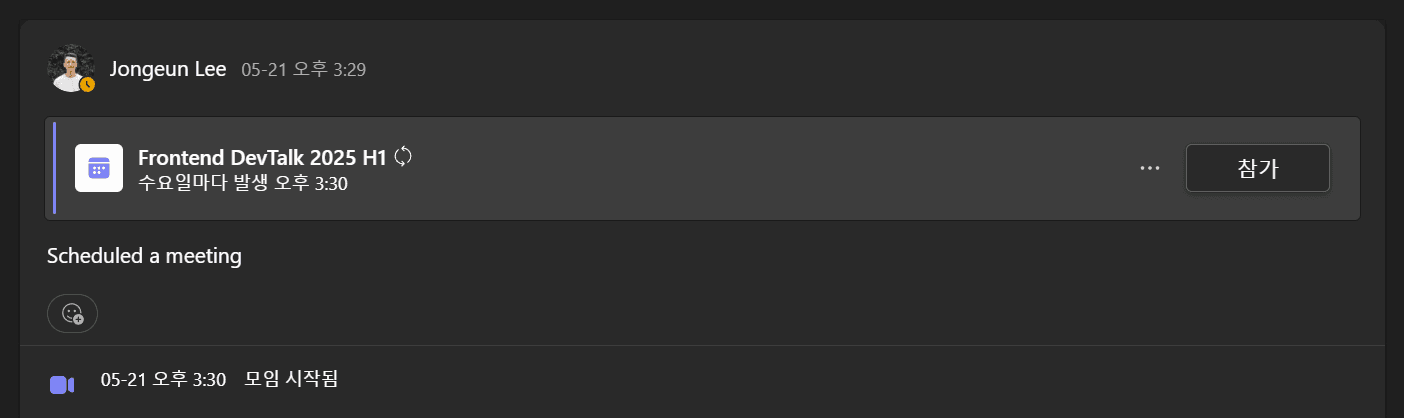
Sujin: We hold 'DevTalk' sessions twice a month, where team members share interesting tech news or updates. In remote work, casual info sharing is rare, so this helps fill that gap.
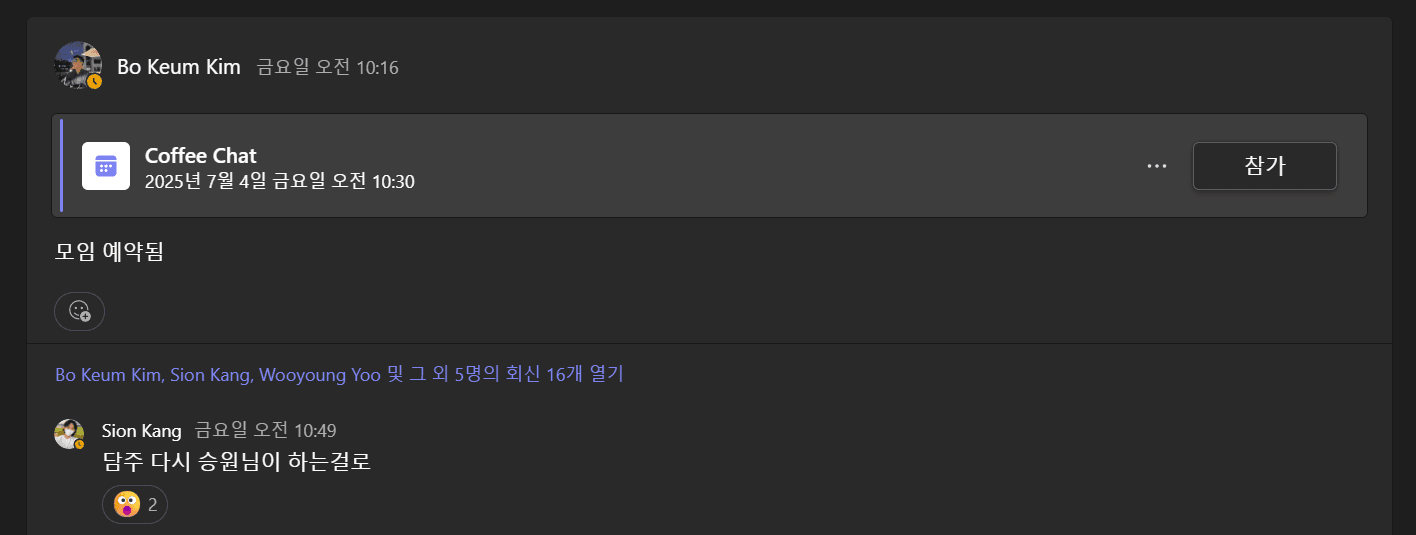
Jongeun: Company-wide, we have ‘Coffee Chat’ every Friday for 30-45 minutes, where everyone meets online to talk about non-work topics. I pushed to keep this culture going since I joined. We also sometimes gather after lunch to discuss tech or hobbies, helping build closeness if people want.
Q. What parts of work are closely linked to personal growth?
Sujin: A unique aspect is that developers participate in exhibitions. Our team meets potential customers, hears their feedback, and thinks about how to present our product externally and improve based on their input, often with support from our DevRel team.
Jongeun: Developers feel happiest when they receive feedback on their products. In B2C, feedback is immediate, letting you see improvements clearly. In B2B, customers tend to be quiet unless big issues arise, so exhibitions are valuable opportunities to get direct feedback and find clues for improvement.
Sujin: There are many opportunities to present, from our annual lab | up > /conf to external events like PyCon. The company encourages and supports presentations, including in open-source activities, which helps build soft skills as well. (laughs)
Jongeun: We also have a retrospective system for organizational and personal growth, often using KPT (Keep, Problem, Try) every one or two months. It helps us reflect on what to maintain or change, and set future directions — we actively encourage participation.
Q. What do you think is Lablup’s biggest attraction?

Sujin: Two things stand out — first, passionate and unique people working together; second, our technological strength. Before joining, I researched online and felt that the company has clear vision and good products. Upon joining, it was obvious where the technology strength comes from. Everyone gathers to do what they love, and there is no one dismantling the organization — everyone is united toward the company’s goals, which I treasure.
Q. What moment have you felt the most rewarding?
Jongeun: I feel a big sense of responsibility as a team leader. About a year after joining, I was walking with team members after lunch near the office when they told me, “We are so glad you joined. The team feels very different before and after you came.” I was going through a period of self-doubt about whether I was fulfilling my role well due to domain and responsibility changes, so their words reassured me and made me proud that I was doing well.
Sujin: I feel proud when our team is recognized. At exhibitions, many visit other booths but recognize us by our badges and say, “We are watching Lablup and learning from you.” That makes me happiest — it tells me we are on the right track.
Q. What kind of talents would you like to work with?

Sujin: Development is a team effort, so we want people who communicate easily, are not afraid to express opinions or ask questions. At Lablup, we have a system where questions are posted publicly in Teams, and anyone can answer. What you wonder might also be what others are curious about, so this builds a valuable shared resource. It can feel strange or uncomfortable at first, but with experience, it proves to be very efficient. Also, many people here love exercising, so it would be great if someone joins us who enjoys working out too! (laughs)
Jongeun: Fit with the company matters. Lablup’s fit is clear: people who can find work on their own initiative and solve problems. Not just people interested in code or technology, but those who think deeply about what ultimate UX our code delivers to users — those people will harmonize well with us.
Interviewees: Jongeun Lee, Sujin Kim
Interviewer, Editor, Photographer: Jinho Heo
Join Lablup!
You may also like
Ready to lab | up with Lablup?
Apply now