Dec 9, 2025
Building Backend.AI from its core
Hyeokjin Kim, Bokeum Kim
 LablupLablup
Dec 9, 2025
Career
Building Backend.AI from its core
Hyeokjin Kim, Bokeum Kim
- LablupLablup
There are people who quietly, yet firmly, support the system from unseen places. The CoreDev team, which takes charge of Backend.AI’s heart, is responsible for designing the platform’s stable foundation and laying the groundwork for new features. Hyeokjin and Bokeum, who continue deep technical discussions and coordinate the team’s speed and efficiency, were interviewed to explore the world they are building.
Q. Please introduce yourselves.
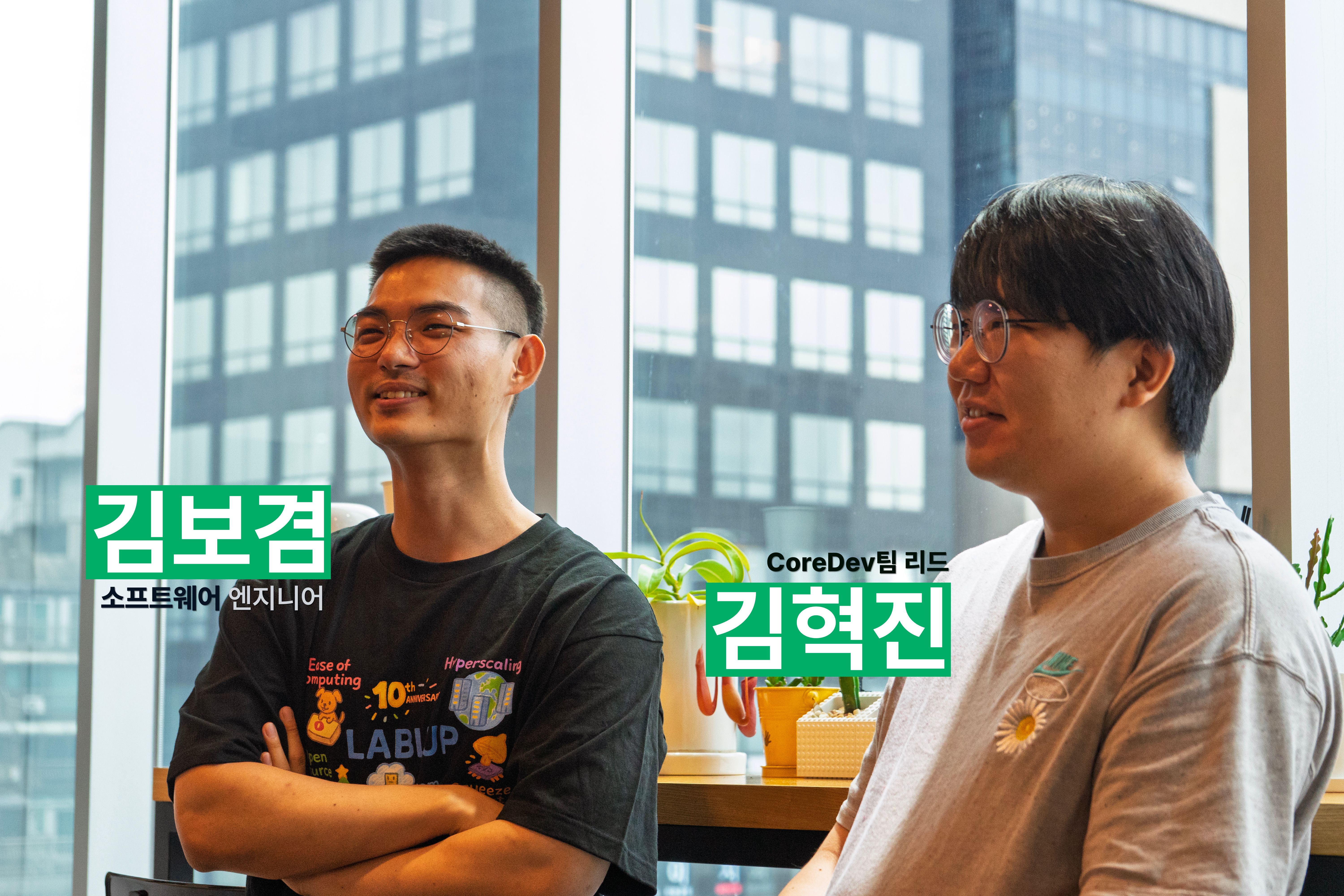
Hyeokjin | I am Hyeokjin Kim, leading the CoreDev team and developing various core functions of Backend.AI.
Bokeum | I am Bokeum Kim, working alongside Hyeokjin in the CoreDev team, focusing on Backend.AI’s new feature development and maintenance.
Q. What led you to join Lablup?
Hyeokjin | I originally worked in media development, but it was hard to see tangible results. The only noticeable achievement was slightly reducing loading times on broadcasts, which did not make a big service-level difference. I wanted to find a field where my efforts could lead to visible results. At the time, AI was rapidly growing, and the technical aspects seemed very interesting, so I joined Lablup, which is close to the infrastructure of AI.
Bokeum | I first learned about Lablup two years ago at the AI Expo. When I heard about the Backend.AI service, I felt it was exactly the kind of software needed in today’s AI-driven era. A friend who had interned at Lablup recommended the company, which led me to join.
Q. Why did you choose backend development among many development fields?
Hyeokjin | I believe backend is the core area for actual feature implementation. I have always enjoyed thinking about how to implement features more efficiently. Even in my first job in the media field, I chose backend because I wanted to work on deeper aspects.
Bokeum | I started my career by planning and operating AI engineer training programs. I wanted to create an environment where technology and AI could solve problems. While managing education, I wanted to become an engineer and contribute directly to products and ecosystems. I tried various fields, including data analysis and data engineering, but I found backend and infrastructure work most enjoyable, which led me here.
Q. Can you explain in detail what the CoreDev team does?
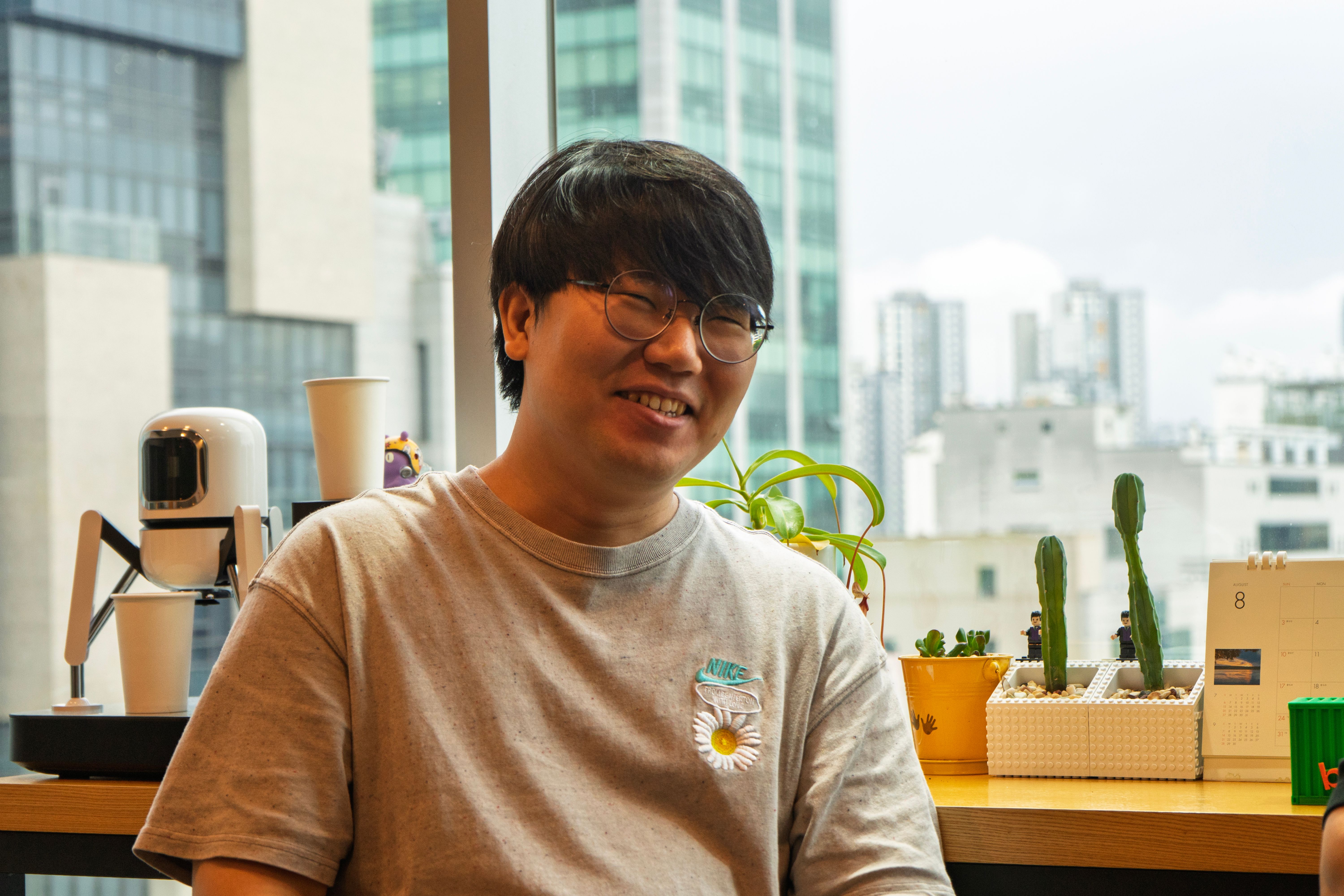
Hyeokjin | The CoreDev team develops the core of Backend.AI. Our biggest goal is to create a stable service that incorporates both existing and new features. When adding or improving a feature, it is not enough to work only on the frontend or API side. Sometimes, unexpected scenarios occur, requiring us to rewrite internal code structures or overhaul existing code for new features. The CoreDev team takes the lead in these internal improvements and new feature development. You could say we are the team that breaks the ground.
Q. What languages and frameworks does the CoreDev team mainly use for development?
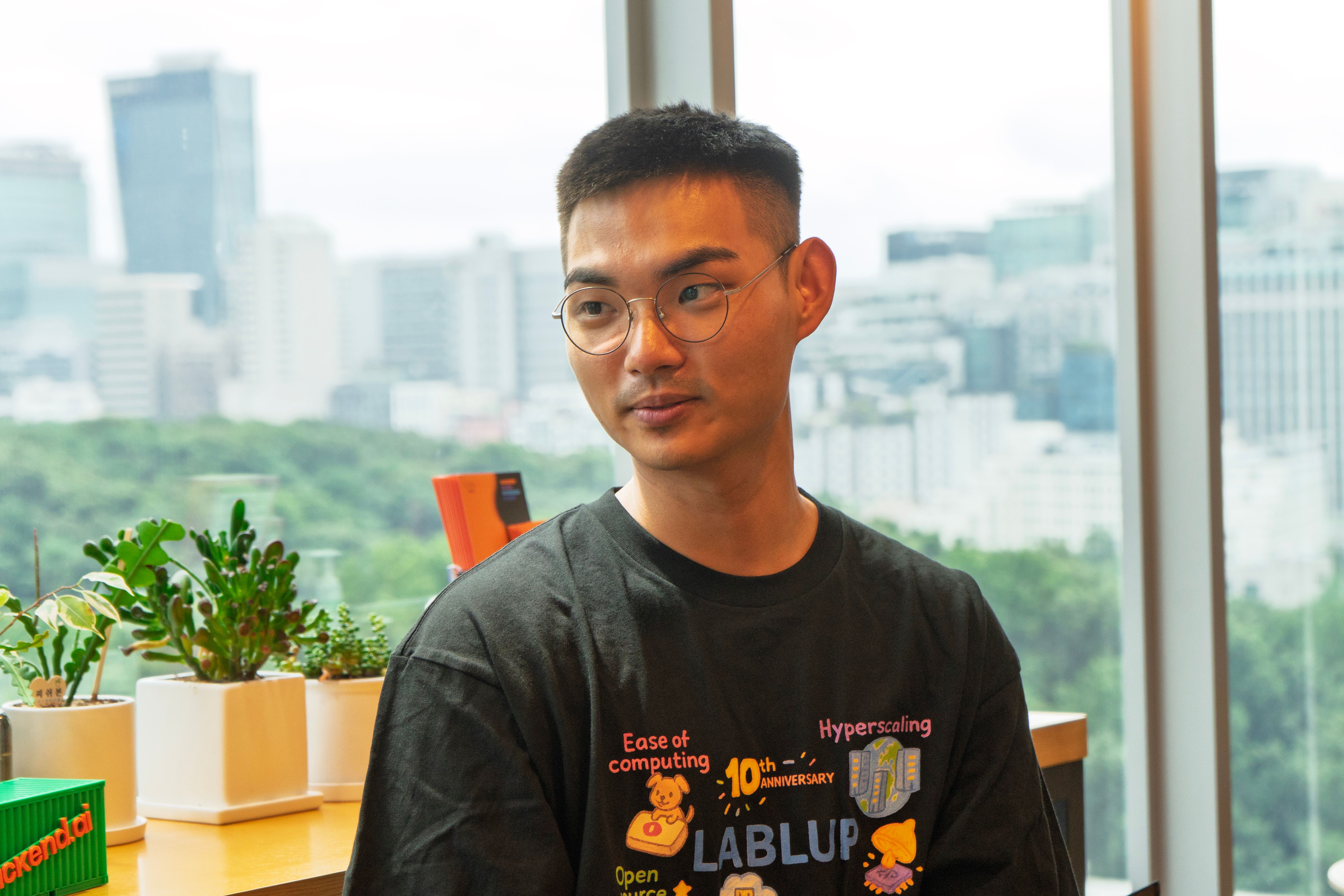
Bokeum | The CoreDev team mainly uses Python. While most backend teams use synchronous libraries or frameworks, we use aiohttp, an asynchronous web framework, for our code. We also use GraphQL server libraries to support both REST and GraphQL communication.
Q. Please introduce one recent project you have been focusing on.
Hyeokjin | I am managing how to structure and complete epic tasks, which are broad and long-term requirements in software development, and maximizing the team’s efficiency to finish within deadlines. Recently, I improved the Redis usage pattern and separated layers to clearly identify error sources. Bugs can occur due to human error, but it is more problematic if we cannot detect them. I implemented Prometheus metrics collection at the API and service layers, added error codes, and applied OpenTelemetry to collect logs.
Bokeum | I have been working on making Backend.AI’s structure easier to maintain. For example, there are some tightly coupled features. These may work well now, but they can be hard to modify or test individually later. If there are many such codes, it becomes difficult to find the cause of bugs, and fixing one bug might cause side effects elsewhere. I mainly work on separating code by responsibility and role to prevent these issues beforehand.
Q. Are there any coding principles that the CoreDev team values the most?
Hyeokjin | When I look at code, I value minimizing worries about whether it will be properly organized or whether unexpected situations will occur. It is important to create a common structure that guarantees consistent behavior for all code within it. For example, if a resource is opened, it must be guaranteed to be closed, and structures that minimize human error are essential.
Bokeum | I value writing clear PR titles and descriptions so that reviewers can immediately understand what feature is being added or what is being fixed, without needing to search through other code. I also emphasize separating concerns so that modifying one piece of code does not cause side effects elsewhere, and defining common behaviors to simplify tasks.
Q. Does Lablup use AI in development or maintenance?
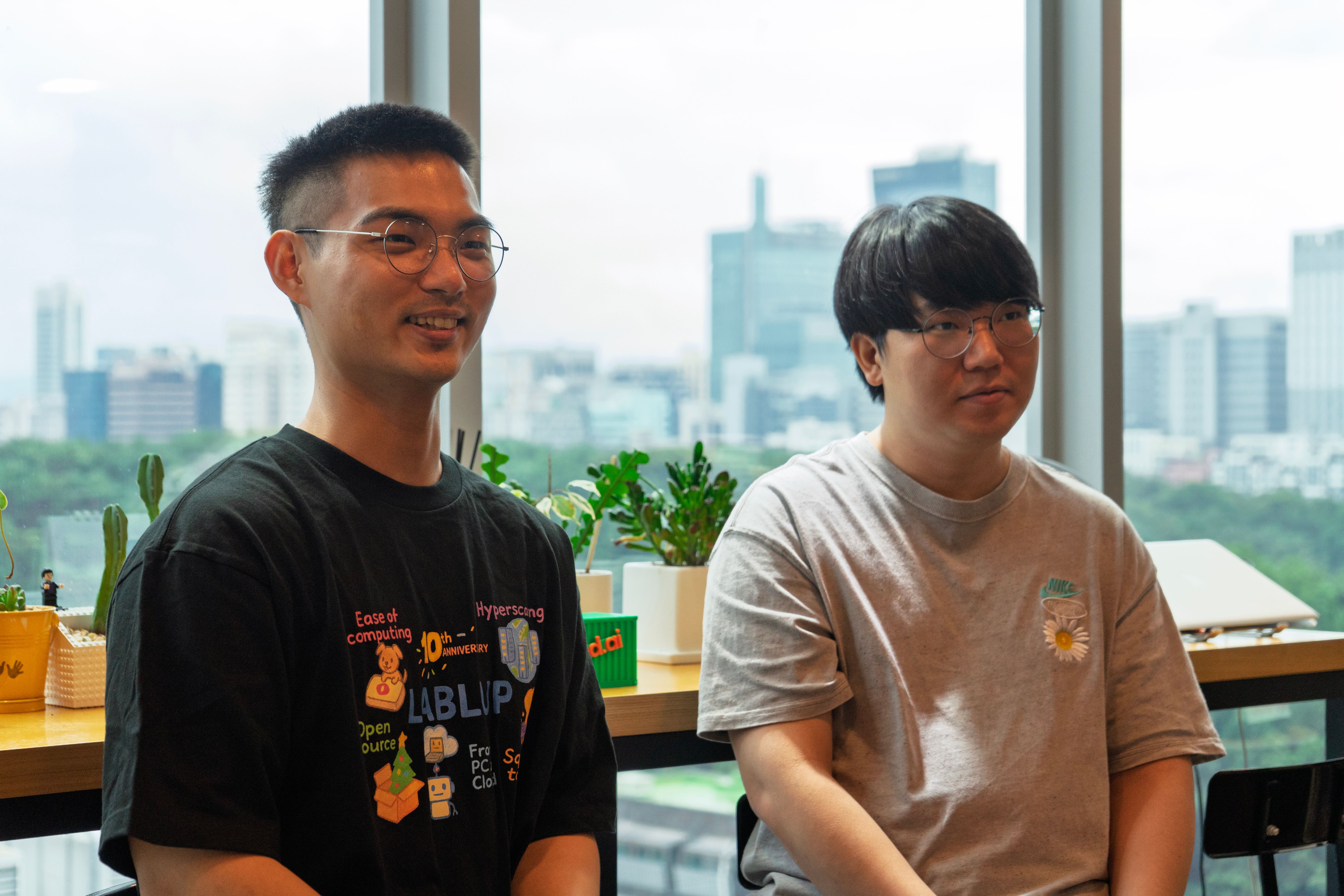
Hyeokjin | We use Claude Code in various parts of our development flow, including refactoring, maintenance, and documentation. We are trying various ways to make the process of using AI for code writing as stable as possible. When working with AI, it is crucial to clearly understand the direction of the code. If you can explain this well to AI, it can produce quite good results. Previously, writing code took some time, but now the time spent on writing code has been reduced to almost nothing. However, development speed does not increase as much as expected because review time and the time needed to understand code do not decrease much. We are internally trying various approaches to minimize these bottlenecks.
Bokeum | After defining the task, I clarify the implementation details and specifications through conversations with Claude, then proceed with the implementation in the form of Claude Code. In the Backend.AI repository, we manage files like CLAUDE.md to create an environment where agents can consistently write code. Finally, we require at least two reviewers before merging to continuously manage code quality.
Q. As AI is being introduced, the role of developers is gradually changing. What does it mean to “do a good job” as a developer?
Hyeokjin | I think it means completing tasks within the expected timeframe and with a high level of completion. If a task is completed by the expected time and does not need to be revisited, that is doing a good job. It might sound basic, but sticking to the basics is what makes someone a good developer.
Bokeum | When working with others, everyone has different opinions. I think a good developer is someone who can quickly find the minimum consensus among different opinions and move the work forward. It is about having the ability to reach agreement, rather than getting stuck in endless discussions.
Q. What kind of person will Backend.AI’s development team need in the future?
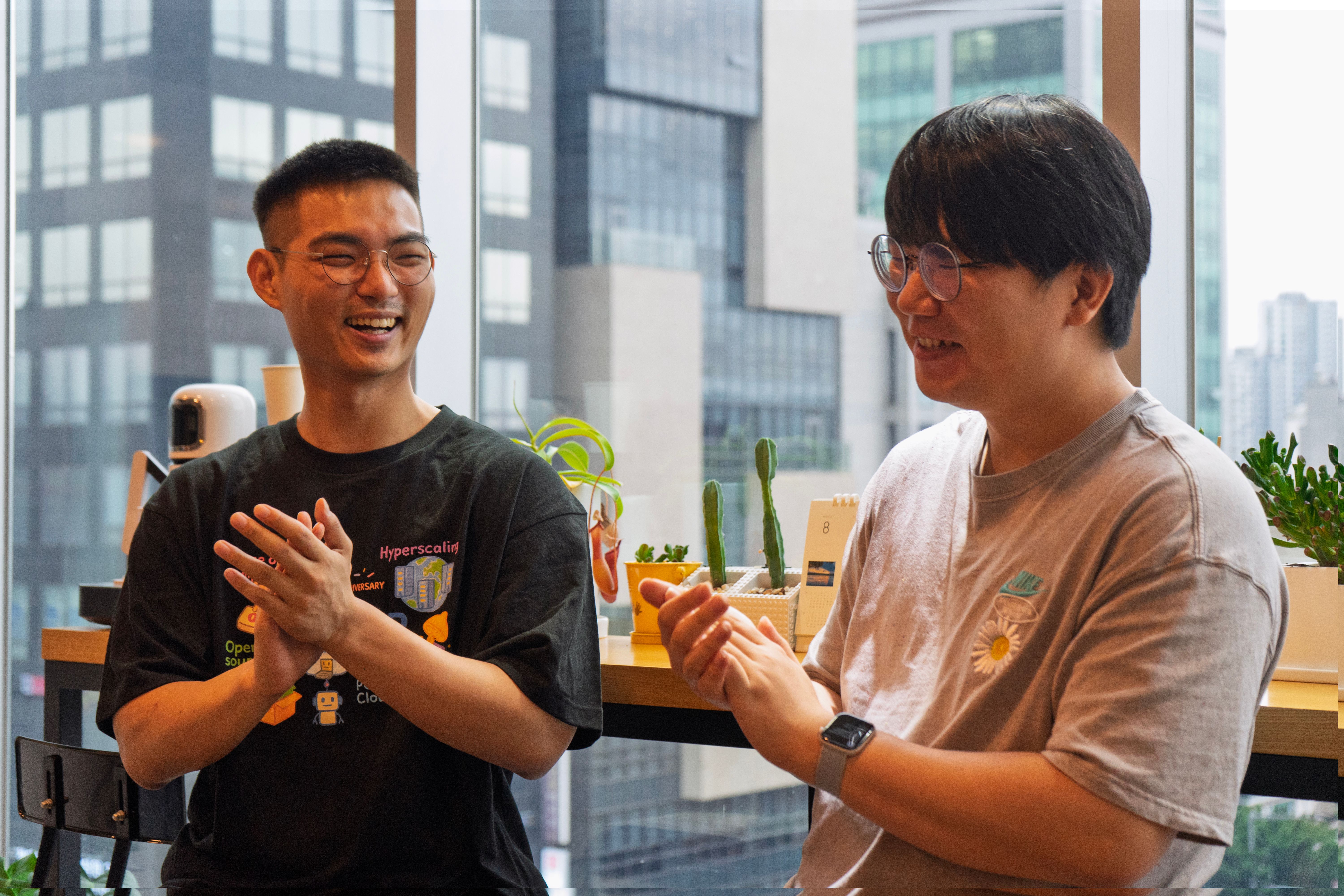
Bokeum | Recently, a friend asked me what kind of developer Lablup is looking for, and I thought about it. In my opinion, Lablup wants a “social developer nerd.” Someone who has their own unique color but can also actively cooperate. It is not just about being technically strong. People who enjoy open source, developer culture, and developer communities would be a better fit.
Hyeokjin | The ability to refine various requirements and shape them into implementable forms is becoming increasingly important. With the advancement of AI tools, simple prototyping has become easier, but the ability to structure the whole system and analyze code is more important. When multiple contexts overlap, AI might take the work in the wrong direction. Ultimately, to build a maintainable system, it is crucial to clearly refine requirements and consistently accept various implementations based on those refined requirements. Context management and requirement refinement skills will become even more important in the future.
This interview was conducted in July 2025.
Interviewee: Hyeokjin Kim, Bokeum Kim
Interviewer, Editor, and Photographer: Jinho Heo
Join Lablup!
You may also like
Ready to lab | up with Lablup?
Apply now